
Genes, Language, Immunity: Insights from local ancestry inference leveraging ancient DNA and biobank sources, a seminar with practical workshop by Dan Lawson - Tartu May 5th 2026
Length: ~2h (overview and practical part)
Location: r314 in Riia 23, Tartu
(Institute of Genomics/Institute of Molecular and Cellular Biology)
Time: 14:00 - 16:00
Local ancestry inference (LAI) can be used to map disease loci, investigate relationships between modern populations, improve association studies, and study demographic histories.
In the first part, we will explore the insights that LAI can offer in the format of a seminar suitable for interdisciplinary researchers. This will explore important insights to medicine in the form of human immune disease, as well as interdisciplinary insights in linguistics and culture as part of the OCSEAN (Oceanic and Southeast Asian Navigators) project.
After a break we will follow a short practical workshop aimed to give an overview of how to work with LAI, focusing on recent scalable algorithms designed for identifying fine-scale population structure under different use cases spanning biobank scale modern datasets to ancient DNA. Attendees can attend the first session only.
In the first part we’ll see how LAI has been crucial for inferring the origins of multiple sclerosis and other immune-related diseases by leveraging both ancient and modern DNA sources. This leads to the isolation of specific genes and tells a story of very recent - perhaps ongoing - selection on human populations. We’ll also compare local ancestry relationships to linguistic relationships and discuss what data might be needed to test concrete hypotheses about gene-language cultural co-evolution.
Despite these clear benefits, performing LAI accurately and efficiently has remained challenging. In the second part we’ll discuss how to use the most up-to-date LAI software packages, each with its own distinctive features, which allow handling large biobank-scale datasets. Newly developed methods are capable of processing hundreds of thousands to millions of samples—sizes typical of the most demanding modern biobanks and association studies. Conversely, researchers interested in population history may be restricted to hundreds of individuals, and therefore focus on tools that carefully retain genetic relationships. Both sets of tools are increasingly accessible.
Outline of the Seminar (part 1):
Introduction to LAI
Use in Population History
Identifying genes under selection
Towards gene-language co-evolution
Outline of the Workshop (part 2):
A brief overview of the concept and currently available software
Introduction to SparsePainter and PBWTpaint
Practical usage
Building the reference panel
Imputation & Phasing
Applying SparsePainter and PBWTpaint to a concrete use case to detect selection on disease-associated loci

Figure: Schematic diagram of the ancestral inference pipeline (Fig 1 from: Hu 2025)
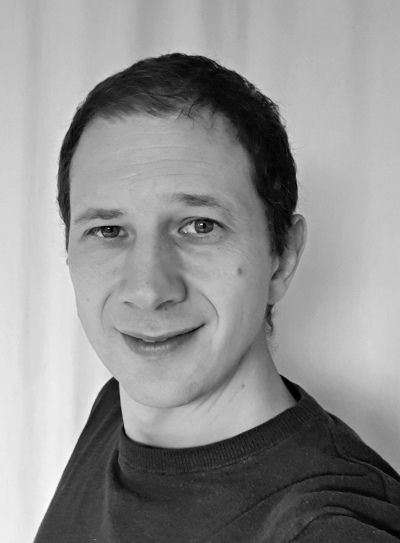
Daniel Lawson is a Professor of Data Science in the School of Mathematics at the University of Bristol. His work focuses on developing scalable statistical and machine‑learning methodology, with applications spanning genetics, cultural evolution, cybersecurity, epidemiology, and social science. His research includes major contributions to genetic ancestry estimation, fine‑scale population structure analysis, spectral methods, Bayesian modelling, and large‑scale data science methodology. He also leads and contributes to interdisciplinary projects such as the OCSEAN project on Austronesian expansion.
More information: https://people.maths.bris.ac.uk/~madjl/
Software development: https://github.com/danjlawson
Dan is visiting University of Tartu as a direct continuation of OCSEAN activities beyond project timeline.
Dan is a scientific advisory board member of two interdisciplinary Centers of Excellence (CoE) lead by the Institute of Genomics, University of Tartu. CoE of Estonian Roots Transdisciplinary Studies and CoE of Personal Medicine CEPM are holding their first common Spring Summit from 6th - 7th of May and Dan's seminar is the pre-event workshop that among introducing LAI inference includes the methods development done during OCSEAN project (WP4) and applications in inter- and transdisciplinary contexts.
References to LAI applications:
Yang, Y., Durbin, R., Iversen, A.K.N. et al. Sparse haplotype-based fine-scale local ancestry inference at scale reveals recent selection on immune responses. Nat Commun 16, 2742 (2025). https://doi.org/10.1038/s41467-025-57601-3
Hu, S., Ferreira, L.A.F., Shi, S. et al. Fine-scale population structure and widespread conservation of genetic effect sizes between human groups across traits. Nat Genet 57, 379–389 (2025). https://doi.org/10.1038/s41588-024-02035-8
Barrie, W., Yang, Y., Irving-Pease, E.K. et al. Elevated genetic risk for multiple sclerosis emerged in steppe pastoralist populations. Nature 625, 321–328 (2024). https://doi.org/10.1038/s41586-023-06618-z
Cassidy, L.M., Russell, M., Smith, M. et al. Continental influx and pervasive matrilocality in Iron Age Britain. Nature 637, 1136–1142 (2025). https://doi.org/10.1038/s41586-024-08409-6


Comments